
How to Avoid Expensive Commercial Fridge Repairs
Your commercial refrigerator stops working on a Friday night during dinner rush. The temperature climbs. Food starts spoiling. You’re losing thousands in inventory while scrambling to find emergency commercial fridge repair services that charge premium rates for after-hours calls. This nightmare scenario plays out in restaurants and food service businesses every day, but it doesn’t have to be yours.
The truth is that most expensive commercial fridge repairs are preventable. With the right maintenance approach and early problem detection, you can avoid the majority of costly breakdowns that plague food service operations.
Understanding the Real Cost of Commercial Refrigerator Repairs
Before diving into prevention strategies, you need to understand what you’re up against. Commercial fridge repair costs typically range from $200 to $1,000 depending on the issue. Simple fixes like replacing a door gasket might run $50 to $350, while major repairs like compressor replacement can exceed $800. Emergency repairs during nights, weekends, or holidays typically cost 10-20% more than scheduled service calls.
But the direct repair cost is only part of the equation. When your commercial refrigerator fails, you’re also facing food spoilage costs that can reach thousands of dollars, lost revenue from being unable to operate at full capacity, potential health code violations that result in fines or closure, and damage to your reputation when customers receive subpar food.

Warning Signs That Signal Trouble Ahead
The key to avoiding expensive commercial fridge repair bills is catching problems early. Your refrigerator communicates when something’s wrong, you just need to know what to look for.
Temperature Fluctuations
Inconsistent temperatures are the most obvious red flag. If your unit isn’t maintaining steady temperatures or food is spoiling faster than expected, you have a problem developing. Even a few degrees off target can compromise food safety and lead to health code violations. Temperature issues typically indicate problems with the thermostat, compressor, or refrigerant levels, all of which worsen rapidly if ignored.
Strange Noises
A properly functioning commercial refrigerator produces a consistent, low hum. New sounds like rattling, grinding, clicking, or banging indicate mechanical issues. These noises often signal problems with the compressor working overtime, fan motors struggling or failing, or loose components that could damage other parts. Addressing unusual noises early prevents the small problem from cascading into a major breakdown.
Excessive Frost or Ice Buildup
While some frost in freezers is normal, excessive ice accumulation signals deeper issues. Large ice buildups, especially on coils or in areas they shouldn’t appear, indicate problems with the defrost system, blocked drain lines, or inadequate airflow. Ice buildup forces your system to work harder, stressing components and driving up energy costs.
Water Leaks and Pooling
Water around your refrigerator isn’t just a slip hazard, it’s a warning sign. Leaks typically result from clogged drain lines, failing door seals allowing warm air infiltration, or defrost system malfunctions. Left unaddressed, water leaks can damage flooring and create mold growth while indicating your refrigerator is working inefficiently.
Rising Energy Bills
A sudden spike in electricity costs without increased usage often points to refrigeration problems. When components like evaporator fans malfunction or door seals fail, your system works overtime to maintain temperature. Dirty condenser coils can increase energy consumption by up to 30% compared to properly maintained units. If your energy bills have climbed, your refrigerator is likely struggling.
The Foundation of Prevention: Regular Maintenance
Consistent maintenance is your strongest defense against expensive commercial fridge repairs. A structured maintenance schedule addresses problems before they escalate into costly breakdowns.
Daily Maintenance Tasks
Your staff should perform these quick checks every day. Monitor and log temperatures at opening and multiple times throughout service. Wipe up spills immediately to prevent moisture buildup and bacterial growth. Ensure doors close properly and check that nothing blocks proper airflow inside units. Keep the area around refrigerators clear of boxes and debris that restrict ventilation.
Weekly Maintenance Schedule
Once per week, dedicate time to deeper inspection. Check door gaskets for tears, gaps, or loss of seal integrity. Inspect for any unusual sounds, vibrations, or performance changes. Look for moisture accumulation on shelves or surfaces. Verify that internal lighting works properly as failing lights can indicate electrical issues.
Monthly Maintenance Requirements
Every month, perform more thorough maintenance tasks. Clean interior surfaces with appropriate food-safe cleaning solutions. Inspect drain pans and tubes for clogs or overflow. Check for any visible signs of wear on moving parts. Verify temperature accuracy with a separate thermometer. Look for any frost or ice forming in unusual locations.

Critical Maintenance: Cleaning Condenser Coils
If you do nothing else, clean your condenser coils regularly. This single task prevents more breakdowns than any other maintenance activity.
Condenser coils release heat from your refrigeration system. When they become clogged with dust, grease, and debris, they cannot efficiently dissipate heat. This forces your compressor to work harder, increases energy consumption, causes overheating that damages components, and dramatically shortens equipment lifespan.
How Often to Clean Coils
For high-traffic commercial kitchens or dusty environments, clean coils every three to four months. Standard commercial kitchen operations should clean coils quarterly, at minimum. Units in cleaner, less demanding environments can often manage with twice-yearly cleaning. However, monthly visual inspections help you determine if your specific environment requires more frequent cleaning.
Proper Coil Cleaning Process
Before starting, always unplug the refrigerator completely. Never work on energized equipment. Locate the condenser coils, typically behind a front grill or rear access panel. Remove the protective grill carefully, noting how it reattaches. Use an industrial vacuum with a soft brush attachment to remove loose debris. Work gently to avoid damaging the delicate coil fins. Use a coil cleaning brush to reach between fins where debris accumulates. For heavy grease buildup common in commercial kitchens, apply manufacturer-approved degreaser to your cleaning brush, never directly on coils. Straighten any bent fins with a fin comb tool. Clean the protective grill with soap and water before reinstalling.
This 15-20 minute task performed quarterly can prevent repairs costing hundreds or thousands of dollars.
Door Seals: The Overlooked Money Saver
Door gaskets are inexpensive components that have outsized impact on your refrigerator’s efficiency and longevity. Worn or damaged seals allow cold air to escape, forcing your system to run constantly and driving up energy costs significantly.
Inspect gaskets twice yearly by running your hand along the seal while the door is closed, feeling for air leaks. Close the door on a dollar bill and try to pull it out; if it slides out easily, the seal needs replacement. Look for visible cracks, tears, or areas where the gasket has pulled away from the door.
Clean gaskets twice per year using warm water and mild soap. Gently wipe inside and out to remove debris that prevents proper sealing. After cleaning, apply a food-safe gasket preservative to maintain flexibility. Replace gaskets at the first sign of failure; the $50-$350 replacement cost is far less than the energy waste and compressor damage from a poor seal.
Temperature Management and Calibration
Maintaining proper temperatures isn’t just about food safety, it’s about equipment longevity. Set commercial refrigerators between 35-38°F and freezers at 0°F or below. Temperatures set too low force your system to work unnecessarily hard, while temperatures too high compromise food safety.
Check temperature accuracy monthly using a separate thermometer placed in the center of the unit. If readings don’t match your thermostat setting, calibration is needed. Schedule professional calibration annually as part of your maintenance program. Small thermostat drifts caught early require simple adjustment; ignored, they lead to compressor failure from constant cycling.
Professional Maintenance: When to Call Experts
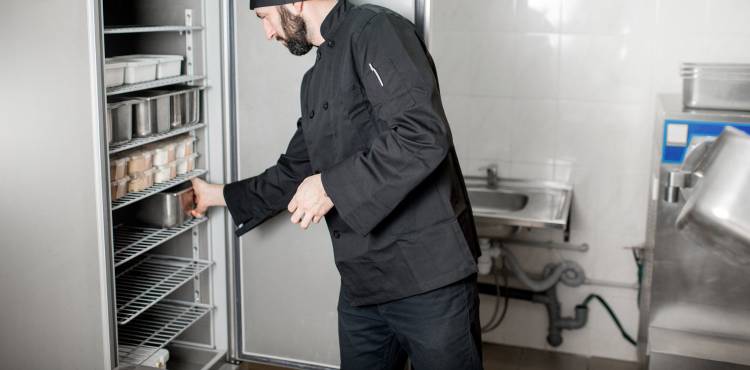
While daily and monthly tasks can be handled in-house, professional commercial fridge repair technicians should inspect your equipment at least twice yearly. Professional maintenance catches developing issues your staff might miss, provides deep cleaning of components requiring specialized tools, includes refrigerant level checks and leak detection, and offers expert calibration of temperature controls.
Schedule professional maintenance during your slowest periods to minimize disruption. Many service providers offer maintenance contracts that provide cost savings over individual service calls, priority scheduling when repairs are needed, and detailed maintenance records for warranty and compliance purposes.
The cost of preventive maintenance service typically ranges from $150-$400 per visit depending on your equipment. Compare this to emergency repair costs of $500-$1,200, and the value becomes clear.
Smart Operational Practices
How you use your commercial refrigerator daily impacts its longevity and repair needs.
Proper Loading Techniques
Never overload refrigerators beyond their capacity. Overstocking blocks airflow, forcing uneven cooling and system strain. Leave space between items for air circulation. Never place hot food directly into refrigerators; cool items to room temperature first. Hot food makes your system work much harder and can damage the compressor over time.
Door Usage Best Practices
Train staff to minimize door opening time. Every second doors stay open, cold air escapes and warm air enters. Keep frequently used items in easily accessible locations to reduce door open time. Ensure doors close fully after each use; propping doors open even briefly wastes energy and strains the system. Install door alarms if staff frequently forget to close doors completely.
Ventilation and Clearance
Maintain proper clearance around all refrigeration units. Most manufacturers specify minimum clearances; typical requirements are 6 inches on sides and rear, and adequate overhead clearance for ventilation. Keep the area around units clean and uncluttered. Never block ventilation openings with boxes, bags, or equipment. Poor ventilation is a leading cause of premature compressor failure.
Documentation and Record Keeping
Detailed maintenance records serve multiple purposes in preventing expensive repairs. Create a maintenance log documenting all daily temperature readings, weekly inspections, monthly cleaning tasks, and professional service visits. Track any unusual observations or minor issues noticed by staff. Document all repairs with dates, costs, and parts replaced.
This documentation helps you identify patterns before they become breakdowns, provides warranty proof if needed, demonstrates due diligence during health inspections, and helps technicians diagnose problems faster by showing maintenance history.
Digital tracking systems and mobile apps can streamline record keeping, but even a simple paper log is better than no documentation.
Knowing When Repair Isn’t Worth It
Sometimes avoiding expensive repairs means making the tough decision to replace rather than repair. Generally, replacement makes more financial sense when repair costs exceed 50% of replacement cost, your unit is over 10-15 years old, you’re experiencing frequent recurring breakdowns, or energy costs have increased dramatically due to inefficiency.
Modern commercial refrigerators are significantly more energy-efficient than units from a decade ago. The energy savings alone can justify replacement in many cases.
The Bottom Line on Commercial Fridge Repair Prevention
Avoiding expensive commercial fridge repair costs isn’t complicated, but it does require commitment. A refrigerator maintained with regular coil cleaning, door seal inspection, temperature monitoring, and professional service will reliably serve your business for 10-15 years or more. One that’s neglected will cost you thousands in premature repairs and eventual replacement.
The difference between a $200 annual maintenance investment and a $1,000 emergency repair or $3,000 premature replacement is simply consistency. Make refrigeration maintenance a non-negotiable part of your operations, train your staff to recognize warning signs, and address small problems before they become big ones.
Your commercial refrigerator is too critical to your operation to treat as an afterthought. With the preventive approach outlined here, you’ll minimize downtime, reduce repair costs, extend equipment life, and maintain food safety and quality your customers expect.
Don’t wait for a breakdown to think about your commercial refrigeration. Contact us today to schedule a comprehensive maintenance inspection or call us at (270) 465-2910 to speak with a certified commercial refrigeration technician. We offer flexible maintenance contracts designed to keep your equipment running reliably while protecting your bottom line from unexpected repair costs.

Add Comment